ayurvedic treatment for acne

ayurvedic treatment for acne, Kasarvadavali

Ayurvedic Treatment for Acne: Healing Skin From the Root

Acne is one of the most common skin concerns I see at my clinic — it affects teenagers navigating hormonal changes and adults dealing with stress, poor diet, or hormonal imbalance well into their 30s and 40s. Most patients who come to me have already tried multiple topical creams, face washes, and dermatological treatments, often with only temporary results.

That’s because modern dermatology largely treats acne from the outside in — targeting the pimple itself with chemical exfoliants, antibiotics, or drying agents. In my practice, I take a different approach. Ayurvedic treatment for acne looks at why the skin is breaking out in the first place, not just how to suppress the visible symptom.
Understanding Acne Through an Ayurvedic Lens

In Ayurveda, acne — referred to as Yauvana Pidika — is understood as an imbalance primarily involving Pitta and Kapha doshas. Pitta governs heat, metabolism, and transformation in the body; when it’s aggravated, it increases inflammation, redness, and the burning, angry quality of active breakouts. Kapha, on the other hand, governs oiliness and structure; when Kapha is out of balance, it leads to excess sebum production and clogged pores.

Layered on top of this dosha imbalance is ama — a Sanskrit term for undigested toxins that accumulate in the body due to weak digestion (Agni). When ama builds up in the bloodstream, it often surfaces through the skin as inflammation, breakouts, and slow-healing blemishes. This is why I always ask new patients about their digestion, stress levels, and eating habits before I ever look at their skin — because in Ayurveda, clear skin genuinely starts in the gut.

How I Approach Acne Treatment at My Clinic

Every patient’s constitution (Prakriti) is different, so treatment is never one-size-fits-all. That said, there are a few pillars I rely on consistently:

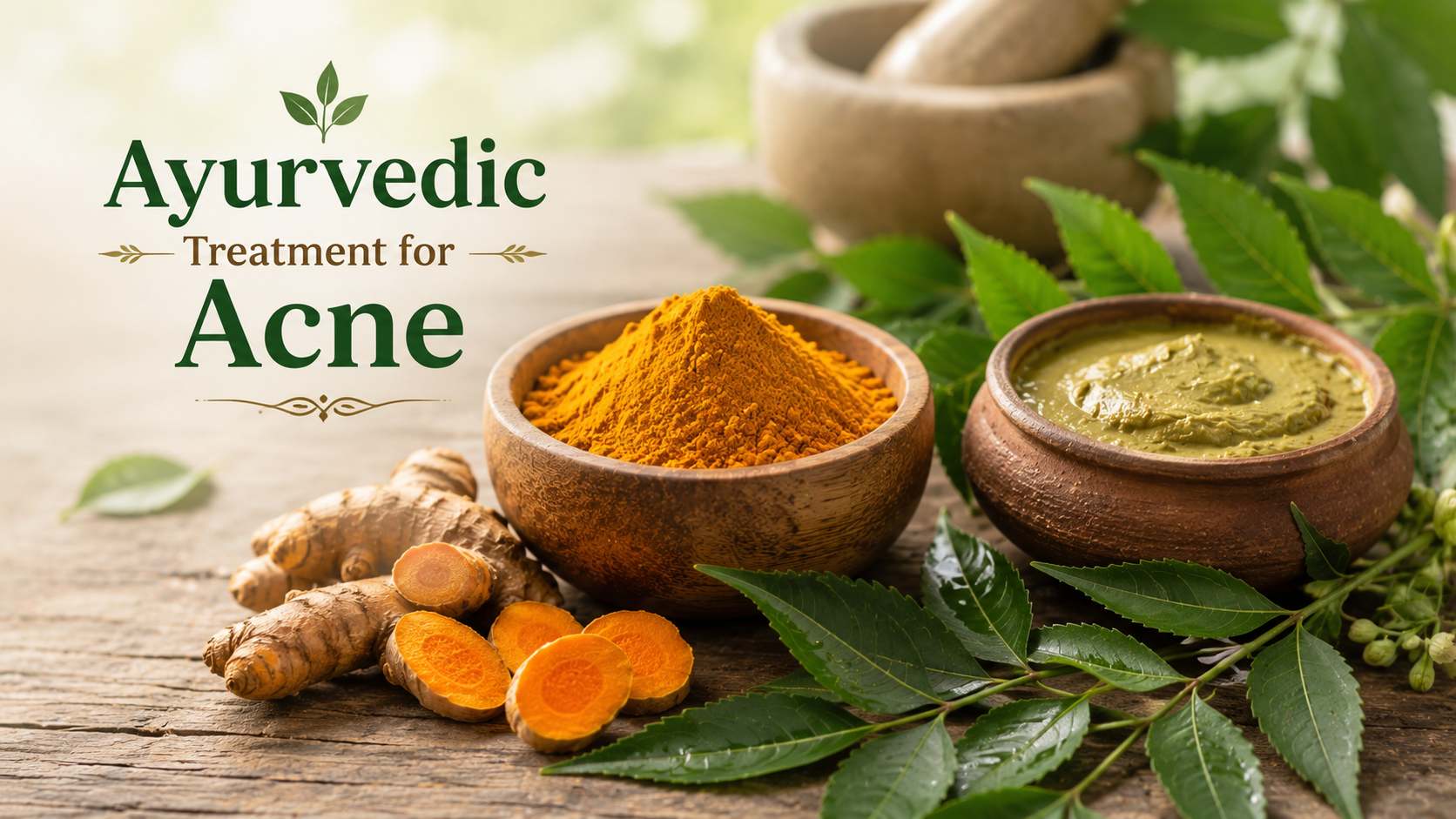
1. Blood and Skin Purification Herbs like neem and manjistha are central to my treatment protocols. Neem’s antibacterial and blood-purifying properties help calm active inflammation and prevent new breakouts, while manjistha works internally to purify the bloodstream — addressing the deeper toxicity that drives recurring acne.

2. Reducing Pitta-Driven Inflammation Turmeric, combined with cooling agents like sandalwood, helps calm the heat and redness associated with Pitta-type acne. I often recommend this as part of a topical face pack alongside internal Pitta-pacifying dietary changes.

3. Correcting Digestion Since ama plays such a central role, I frequently prescribe Triphala to support healthy digestion and gentle detoxification. Patients are often surprised at how much their skin improves once their digestive fire is restored.

4. Panchakarma for Chronic or Hormonal Acne For patients with long-standing or hormonal acne that hasn’t responded to milder treatments, I recommend Panchakarma therapies, particularly Virechana (therapeutic purgation), performed under close clinical supervision at our center. This deep detoxification addresses the root toxin load in a way that topical treatment alone simply cannot.

Diet and Lifestyle Guidance I Give My Patients

Alongside herbal treatment, I counsel every acne patient on the following:

  1. Avoid fried, spicy, and processed foods, which aggravate Pitta and worsen breakouts
  2. Start the day with warm water and lemon to support natural detoxification
  3. Include bitter and astringent foods like bitter gourd and pomegranate, which help purify the blood
  4. Practice Pranayama and stress-reduction techniques, since stress is a well-documented acne trigger

Why Patience Matters

I’m upfront with every patient: ayurvedic treatment for acne is not an overnight fix. Unlike a chemical spot treatment that suppresses a single pimple, this approach works to rebalance the body’s internal systems — which takes time, typically several weeks to a few months, depending on the severity and chronicity of the condition. What patients gain in return is a resolution that lasts, along with healthier skin overall, rather than a cycle of breakouts returning the moment treatment stops.

If you’ve been struggling with persistent acne despite trying conventional treatments, I’d encourage you to consider addressing it from the root. At Dr. Narkhede Ayurved & Panchkarma Clinic, we assess your unique constitution, digestive health, and lifestyle to build a treatment plan suited specifically to you — not a generic protocol.

Book a consultation with Dr. Sagar Narkhede to begin your journey toward clear, healthy skin the Ayurvedic way.

Ayurvedic Treatment for Acne Kasarvadavali.

Ayurvedic Treatment for Acidity, Anandnagar

Ayurvedic Treatment for Acidity: A Natural Way to Heal Amlapitta from the Root

If you’ve ever felt that familiar burning rise in your chest after a heavy meal, or the sour taste that lingers long after you’ve finished eating, you already know how disruptive acidity can be. In Ayurveda, this condition is called “Amlapitta” — a state where excess Pitta dosha disturbs the digestive fire (Agni), producing a burning sensation, sour belching, and general discomfort after meals.

Most people reach for an antacid the moment these symptoms strike. It works — for an hour or two. But antacids only suppress the symptom; they don’t touch the imbalance causing it in the first place. This is exactly where ayurvedic treatment for acidity takes a different, more lasting approach: instead of simply neutralizing acid, it works to correct the underlying Pitta imbalance so the problem doesn’t keep coming back.

What Really Causes Acidity, According to Ayurveda

Before jumping into remedies, it helps to understand why acidity happens in the first place. Ayurveda points to a few everyday habits as the main culprits:

  1. Excess spicy or fried food — these are inherently heating and directly aggravate Pitta.
  2. Irregular eating times — skipping meals or eating at inconsistent hours confuses Agni.
  3. Chronic stress — mental agitation is considered a major, often-overlooked trigger for Pitta imbalance.
  4. Late-night eating — eating close to bedtime doesn’t give Agni enough time to process food properly before the body slows down for sleep.

Recognizing which of these patterns applies to you is often the first real step toward lasting relief, since no herbal remedy can outpace habits that keep re-aggravating Pitta.

Effective Ayurvedic Remedies for Acidity

Once the root causes are addressed, Ayurveda offers a set of simple, time-tested remedies that cool the digestive tract and restore balance. These are the pillars of any good ayurvedic treatment for acidity:

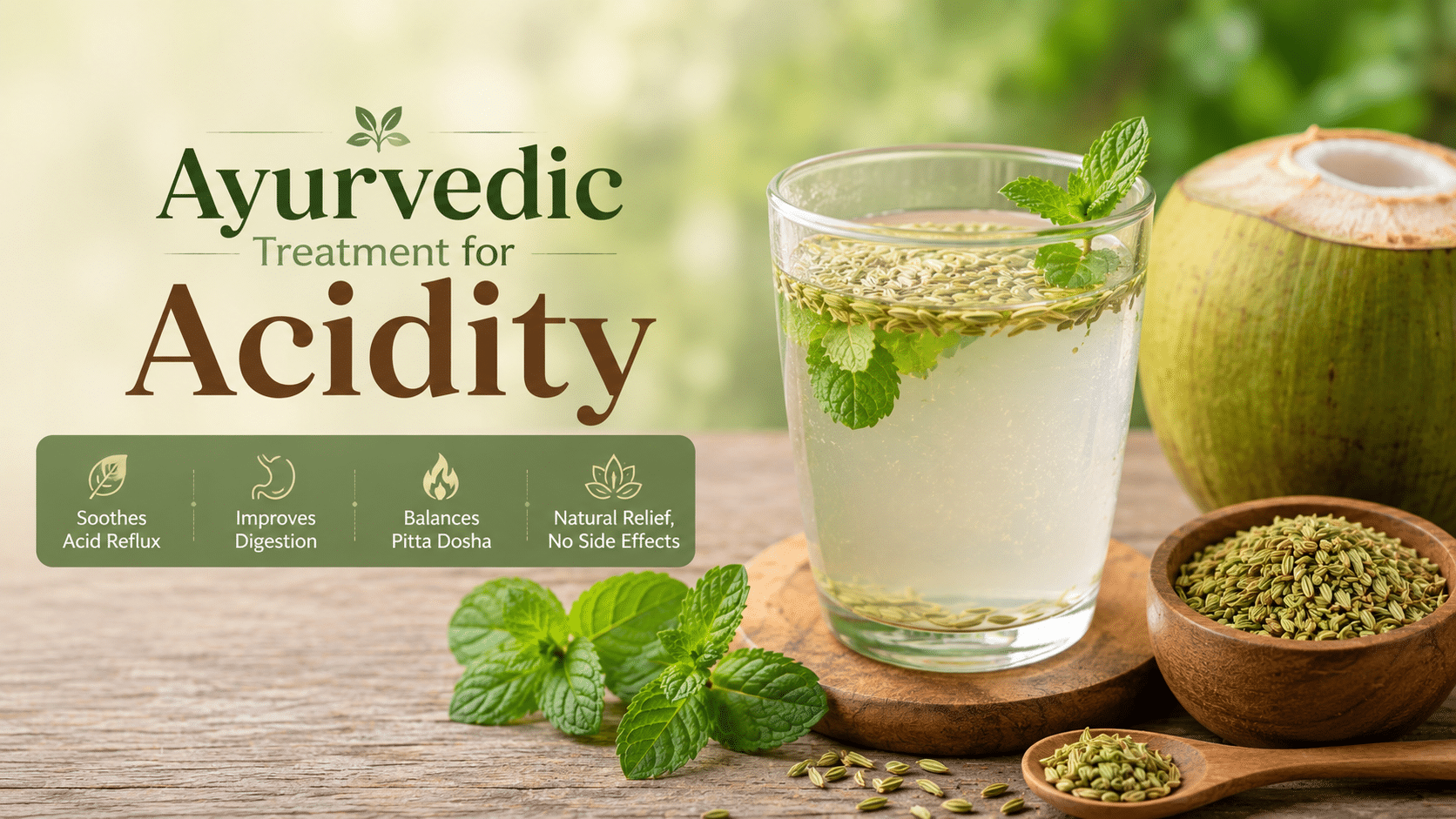
  1. Fennel seeds (Saunf): Chew about a teaspoon after meals. Fennel has a naturally cooling effect that calms the stomach and reduces the urge for sour belching.
  2. Amla (Indian gooseberry): One of Ayurveda’s most powerful Pitta-pacifiers, Amla soothes the gut lining while also supporting overall digestive strength.
  3. Coconut water: When acidity strikes suddenly, a glass of coconut water can cool the excess heat almost instantly while replenishing lost electrolytes.
  4. Cumin-coriander-fennel tea: This classic trio, sipped warm after meals, is one of the gentlest ways to support digestion without adding any heat to the system.
  5. Avipattikar Churna: A well-known classical Ayurvedic formulation specifically designed for acidity and hyperacidity, often recommended by practitioners for more persistent cases.

Dietary Tips to Support Ayurvedic Treatment for Acidity

Remedies work best when paired with the right diet. A few adjustments can make a significant difference:

  1. Cut back on excessive tea and coffee, which tend to increase acid production.
  2. Minimize spicy and fried foods, especially during flare-ups.
  3. Favor naturally cooling foods such as cucumber, melons, and leafy greens.
  4. Eat dinner at least 2–3 hours before bedtime, giving your stomach enough time to digest before you lie down.

These aren’t extreme restrictions — they’re small, sustainable shifts that, over time, keep Pitta from building up again.

Lifestyle Changes That Make a Real Difference

Diet and herbs are only part of the picture. Ayurveda places equal importance on how you eat and live day to day:

  1. Practice mindful eating — eating slowly and without distraction helps Agni do its job properly.
  2. Avoid lying down immediately after meals — this simple habit change alone can prevent a lot of nighttime discomfort.
  3. Manage stress through yoga and pranayama — since stress is one of the biggest hidden triggers of acidity, calming the mind is just as important as calming the stomach.

The Takeaway

With consistent use of these remedies and a bit of dietary discipline, most people start noticing real relief from acidity within a few weeks. The beauty of ayurvedic treatment for acidity lies in its gentleness — it doesn’t just silence the burning sensation temporarily, it works patiently to restore balance so the discomfort has less reason to return.

That said, if your acidity is chronic, severe, or accompanied by other symptoms, don’t rely on self-treatment alone. Consult a qualified Ayurvedic physician who can assess your unique constitution (Prakriti) and design a personalized treatment plan for lasting relief.